Data Analytics vs Data Science: Roles and Responsibilities
Responsibilities of a Data Analyst
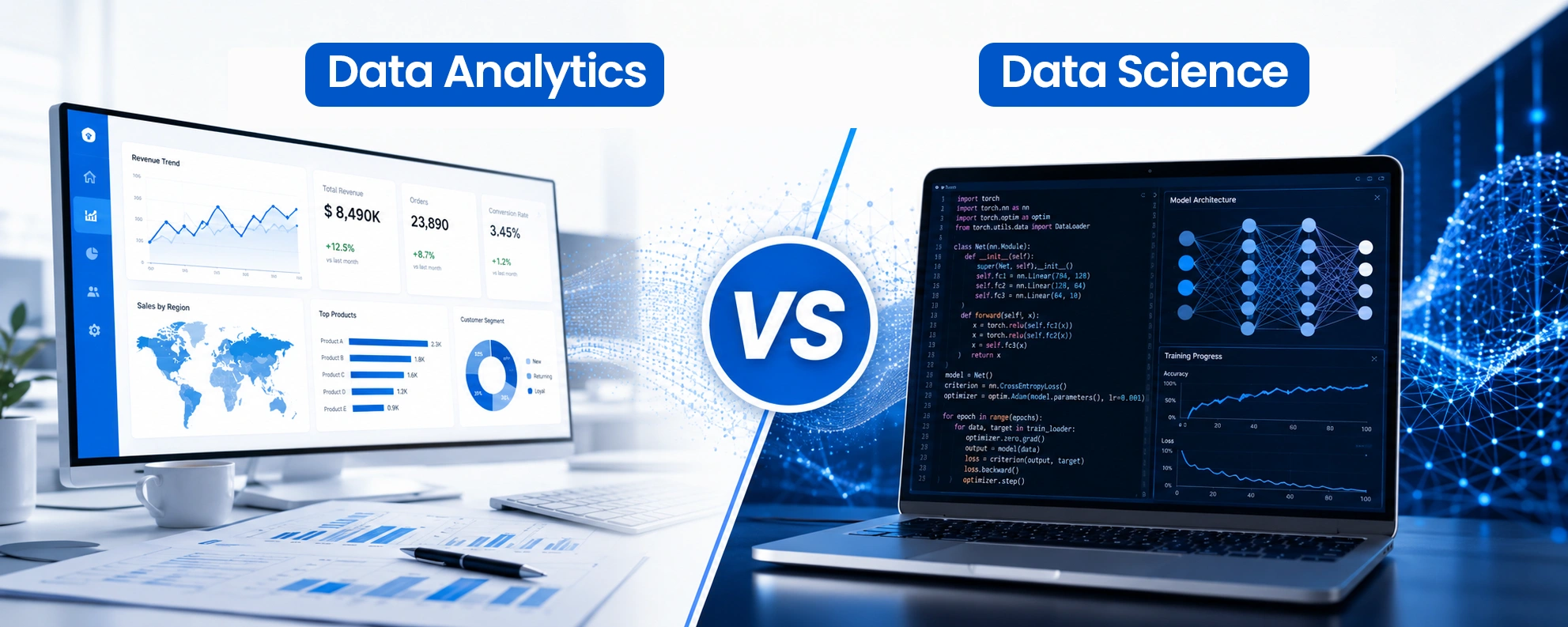
A Data Analyst collects, cleans, and analyzes data to help businesses make informed decisions. They use tools like SQL, Excel, Power BI, and Tableau to create reports, build dashboards, identify trends, and present actionable insights to stakeholders. Their primary focus is turning raw data into valuable business intelligence.
Responsibilities of a Data Scientist
A Data Scientist develops advanced data-driven solutions using machine learning, artificial intelligence, and statistical models. They analyze large datasets, build predictive models, create recommendation systems, and automate decision-making processes using Python and other advanced tools. Their work is highly technical and focused on solving complex business problems through AI and data science.
Skills Required for Data Analytics & Data Science
Data Analytics
If you want to become a data analyst in 2026, these skills are essential:
- SQL: SQL remains the most important skill for querying databases.
- Microsoft Excel: Advanced Excel is still widely used for business reporting.
- Power BI: One of the most in-demand visualization tools.
- Tableau: Used for creating interactive dashboards.
- Python: Helpful for automation and analysis.
- Statistics: Basic statistical knowledge helps interpret data correctly.
- Communication Skills: Analysts regularly present findings to stakeholders.
Data Science
A data scientist requires deeper technical expertise. Important skills include:
- Python: The most widely used programming language for data analysis, machine learning, and AI model development.
- R Programming: A powerful language used for statistical computing, data visualization, and advanced data analysis.
- SQL: Essential for querying, managing, and extracting data from relational databases.
- Statistics: Helps interpret data, identify patterns, and build accurate predictive models.
- Probability: Provides the foundation for machine learning algorithms and data-driven decision-making.
- Machine Learning: Enables computers to learn from data and make predictions without explicit programming.
- Deep Learning: A branch of machine learning that uses neural networks for tasks like image recognition, speech processing, and natural language processing.
- Data Engineering Basics: Involves understanding how data is collected, processed, stored, and prepared for analysis.
- Cloud Computing: Knowledge of platforms like AWS, Azure, or Google Cloud helps manage and deploy large-scale data solutions.
- Big Data Technologies: Tools such as Hadoop and Spark are used to process and analyze massive datasets efficiently.
- AI Frameworks: Frameworks like TensorFlow and PyTorch are used to build, train, and deploy artificial intelligence models.
- Feature Engineering: The process of selecting, transforming, and creating meaningful data features to improve machine learning model performance.
Data Analytics vs Data Science: Programming Requirements
Programming requirements differ significantly.
Data Analytics
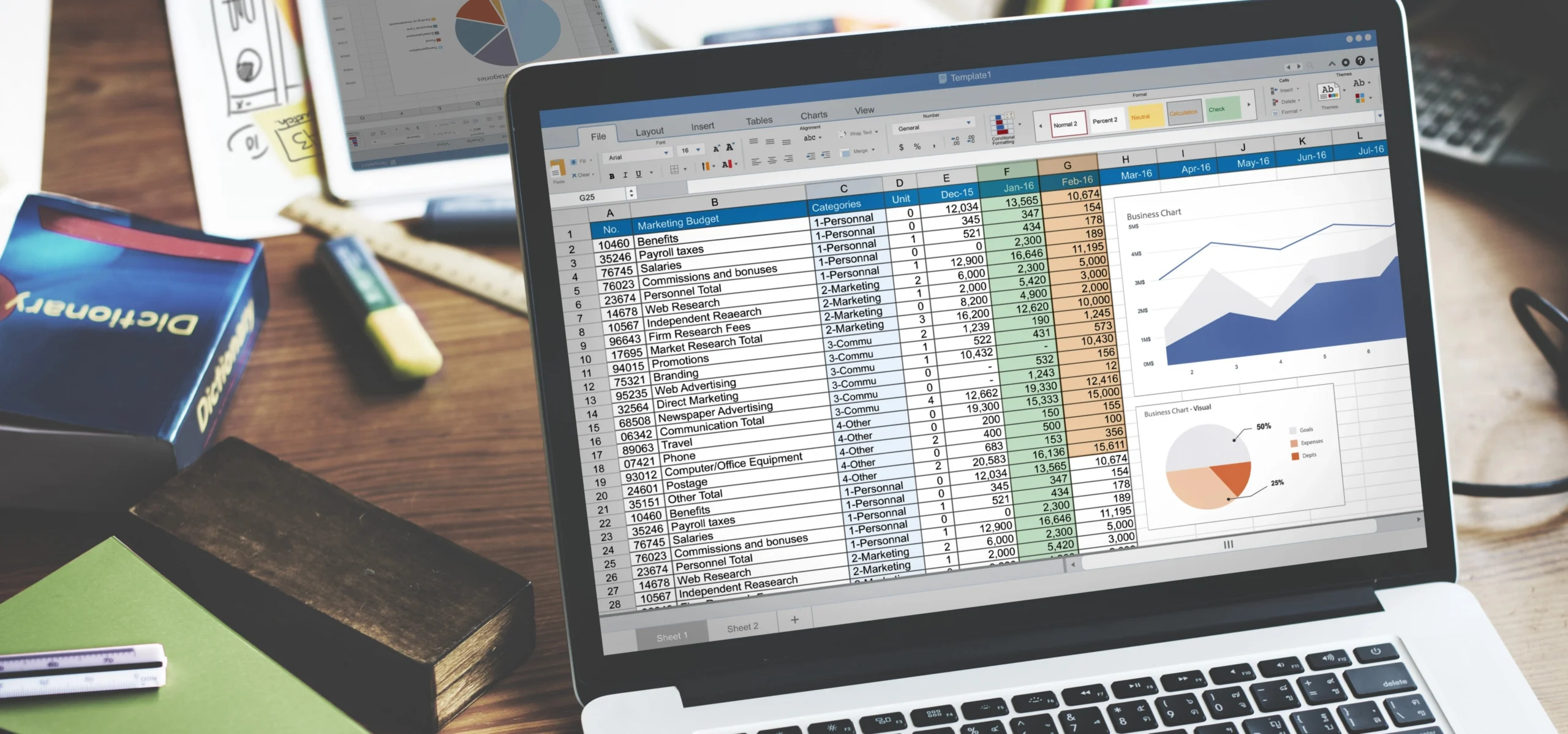
Programming is useful in Data Analytics but is not always mandatory, especially for entry-level roles. Many beginners start with an Advanced Excel course before moving on to SQL, Power BI, Tableau, and basic Python. Most data analysts use tools like SQL to manage databases, Excel for data analysis, Power BI and Tableau for creating dashboards, and basic Python for data cleaning, automation, and simple analysis.
Data Science
Programming is a core requirement in Data Science, as the role involves building predictive models and AI solutions. Data scientists commonly work with Python, R, SQL, Pandas, NumPy, Scikit-Learn, TensorFlow, and PyTorch to analyze large datasets, develop machine learning models, and solve complex business problems.
Which Career Is Easier?
For most beginners, Data Analytics is easier to learn because it requires less technical knowledge than Data Science. You can start with basic skills like SQL, Excel, Power BI, and simple Python, making it a great choice for those entering the data field. The learning curve is shorter, and many entry-level jobs focus on analyzing data and creating reports rather than building complex models.
On the other hand, Data Science is more challenging because it requires a strong understanding of programming, mathematics, statistics, machine learning, and algorithms. It involves developing predictive models and AI-powered solutions, so it generally takes more time and effort to master. If you’re new to the field, starting with Data Analytics and later transitioning to Data Science is a common and practical career path.
Salary Comparison in 2026
Salary depends on experience, location, industry, and company size.
Data Analyst Salary

The salary of a Data Analyst depends on experience, skills, location, and the company. In India, freshers typically earn ₹4–8 LPA, while experienced professionals can earn ₹15–25+ LPA. Globally, salaries usually range from $65,000 to $140,000+ per year, making Data Analytics a rewarding career with strong growth potential.
Data Scientist Salary
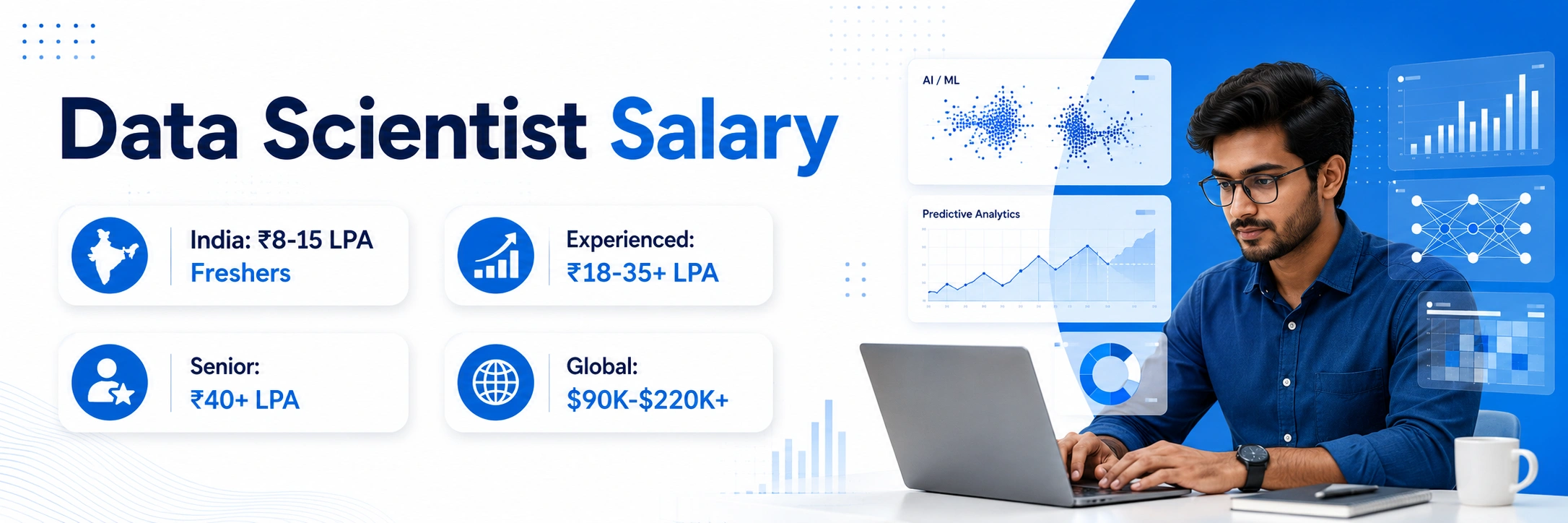
Data Scientists generally earn higher salaries due to their advanced technical skills in AI, machine learning, and predictive analytics. In India, freshers can expect ₹8–15 LPA, while experienced professionals earn ₹18–35+ LPA, and senior experts may earn ₹40 LPA or more. Globally, salaries typically range from $90,000 to $220,000+ per year, depending on experience, industry, and location.
Verdict: Data Science generally offers higher earning potential, especially in AI-driven industries.
Data Analysts and Data Scientists Job Demand in 2026
Both careers continue to experience strong demand due to digital transformation and AI adoption.
Industries Hiring Data Analysts
Data Analysts are needed in almost every industry because businesses use data to improve performance and make better decisions. In 2026, professionals in this role are widely hired by organizations in banking, healthcare, retail, insurance, manufacturing, consulting, marketing, education, and logistics, where they analyze business data, prepare reports, and provide actionable insights.
Industries Hiring Data Scientists
Data Scientists are in high demand in industries that rely on artificial intelligence, machine learning, and predictive analytics. Companies in AI, FinTech, healthcare, autonomous vehicles, robotics, cybersecurity, e-commerce, cloud computing, and research organizations actively hire Data Scientists to build intelligent systems, develop predictive models, and solve complex business challenges.
Data Analysts and Data Scientists Career Growth
Data Analytics Career Path
A career in Data Analytics offers steady growth with opportunities to take on more strategic and leadership roles over time. Most professionals begin as Junior Data Analysts, progress to Data Analyst and Senior Data Analyst, and later move into positions such as Business Analyst, Analytics Manager, or Head of Analytics, depending on their experience and expertise.
Data Science Career Path
Data Science provides excellent long-term career growth, especially for professionals who continue building their technical and AI skills. A typical career path starts as a Junior Data Scientist, followed by Data Scientist and Senior Data Scientist. With experience, professionals can advance to roles such as Machine Learning Engineer, AI Engineer, Lead Data Scientist, and eventually Chief Data Officer or other senior leadership positions.
Required Education for Data Analysts and Data Scientists
Educational Requirements for Data Analytics
To build a career in Data Analytics, a degree in Computer Science, Mathematics, Statistics, Economics, Business, or Engineering is generally sufficient. Along with a relevant degree, professional certifications and hands-on projects can improve your skills and increase your chances of getting hired.
Educational Requirements for Data Science
Most employers prefer Data Science candidates with a background in Computer Science, Data Science, Statistics, Mathematics, Artificial Intelligence, Machine Learning, or Engineering. While advanced degrees can be beneficial for research-focused roles, many companies also value practical skills, real-world projects, and a strong portfolio.
Which Tools Should You Learn?
Data Analytics Tools
To become a successful Data Analyst, you should learn tools that help with data collection, analysis, and visualization. Some of the most commonly used tools include Excel, SQL, Power BI, Tableau, Google Sheets, Python, and Looker Studio. These tools enable analysts to clean data, create dashboards, generate reports, and deliver valuable business insights.
Data Science Tools
Data Scientists use advanced tools to analyze large datasets, build machine learning models, and develop AI solutions. The most important tools to learn include Python, R, Jupyter Notebook, TensorFlow, PyTorch, Pandas, NumPy, Hadoop, Spark, Docker, and Git. Mastering these tools helps professionals solve complex data problems and build scalable data science applications.
Can a Data Analyst Become a Data Scientist?
Yes, a Data Analyst can become a Data Scientist with the right skills and experience. Many professionals begin their careers in Data Analytics and later transition into Data Science by learning Python, machine learning, statistics, artificial intelligence (AI), deep learning, and advanced mathematics. Starting as a Data Analyst also helps build strong business knowledge and practical experience, making the move to Data Science smoother and more effective.
Which Career Is Better for Freshers?
For most beginners in 2026, Data Analytics is often the more accessible entry point because it requires fewer advanced technical skills while offering excellent job opportunities. If you’re planning to join a data analyst course, this career path provides a faster and more beginner-friendly way to enter the data industry. Data Science may be a better fit if you already have:
- Strong programming knowledge
- Good mathematics skills
- Interest in AI and machine learning
- Willingness to invest more time in learning
Future Scope in 2026 and Beyond
Both Data Analytics and Data Science offer excellent career opportunities in 2026 and beyond as businesses continue to rely on data for decision-making.
Data Analytics
The demand for Data Analysts is expected to remain strong as organizations need professionals to analyze data, create reports, and support business decisions. With the increasing use of business intelligence tools, skilled analysts will continue to play a vital role across industries.
Data Science

Data Science has an even broader future due to the rapid growth of artificial intelligence (AI), machine learning, and automation. Companies are investing heavily in intelligent technologies, creating strong demand for Data Scientists who can build predictive models and AI-powered solutions.
Rather than competing with each other, Data Analytics and Data Science complement one another, and both are expected to remain highly valuable career choices for years to come.
Data Analytics vs Data Science: Which One Should You Choose?
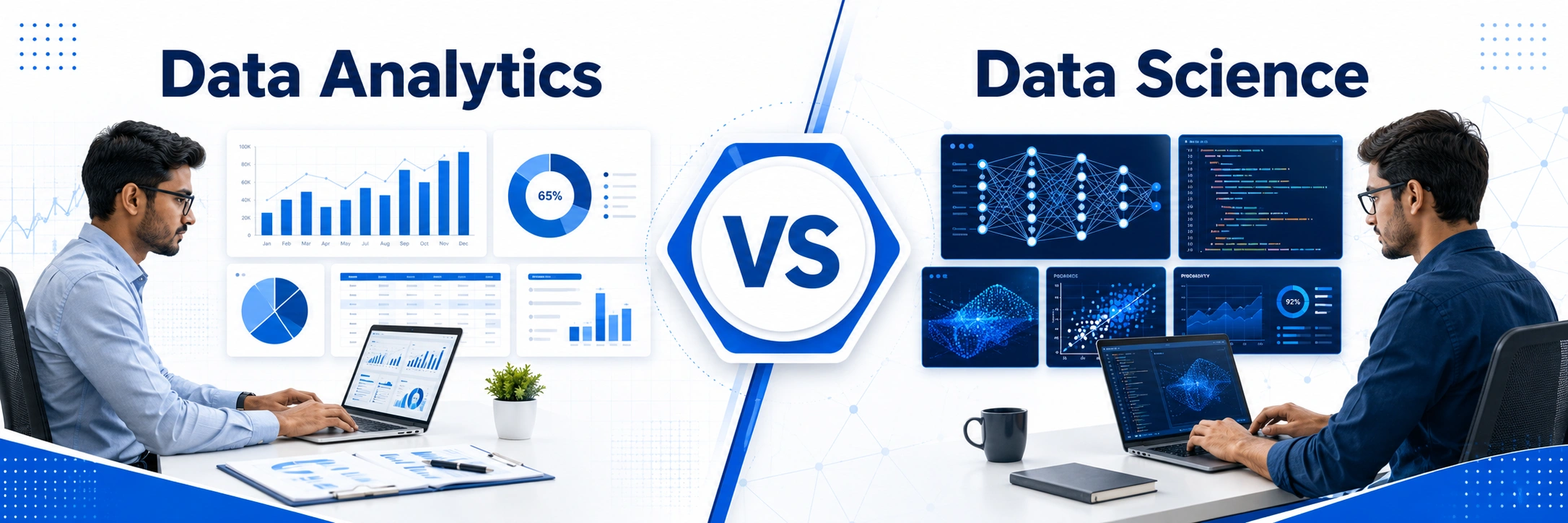
Choose Data Analytics if you:
- Are a fresher or career switcher with no coding background
- Enjoy working with business data, reports, and dashboards
- Want to get job ready faster — within 6 to 12 months
- Are comfortable with Excel, SQL, and visualisation tools
- Prefer clear, structured, and practical day to day work
Choose Data Science if you:
- Have a background in engineering, mathematics, or computer science
- Enjoy building systems, writing complex code, and experimenting
- Are ready to invest 1 to 2 years in deep, intensive learning
- Want to work on AI, machine learning, and predictive modelling
- Are aiming for higher salary packages at the senior leve